
Portable Gantries
Portable gantries provide a flexible lifting solution where a permanent overhead crane or fixed lifting system isn’t practical. Designed to provide a temporary or movable lifting point, portable gantries can be positioned where lifting is required and then relocated or dismantled when no longer needed.
Lifting Gear Products supplies a range of portable, mobile and workshop gantries for lifting and handling applications across engineering, manufacturing, maintenance, construction, warehouses, workshops and other industrial environments throughout the UK.
Our range includes steel mobile gantries, lightweight workshop gantries and aluminium portable site gantries, with different lifting capacities, spans, heights and configurations available. Depending on the model, gantries can be supplied with beam trolleys and can be used with compatible manual or powered hoists.
Products
-
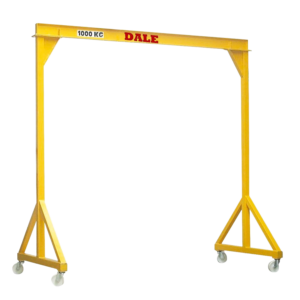
DALE PORT Workshop Mobile Gantry – 250kg-2t WLL
Price on request -

DALE PORTC Workshop Light Steel Gantry – 250kg-1t WLL
Price on request -
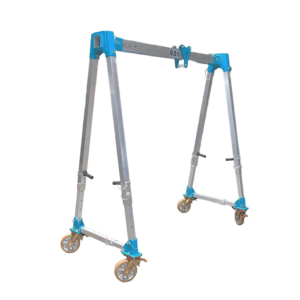
DALE Type A Steel Mobile Lifting Gantry – 500kg-2t WLL (Unbraced)
Price on request -
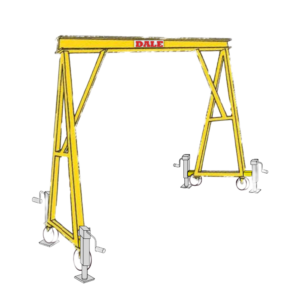
DALE Type B Steel Mobile Lifting Gantry – 2t-5t WLL (Braced)
Price on request -
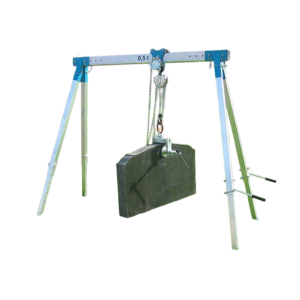
WiMAG 526 Aluminium Mobile Gantry with Beam Trolley – 500kg WLL
Price on request
Choosing the Right Portable Gantry
The most suitable portable gantry depends on more than the weight of the load. The lifting capacity, available height, required span, working environment and how often the gantry needs to be moved should all be considered.
Key factors include:
- Working Load Limit (WLL) – the gantry must have a suitable rated capacity for the intended load and lifting arrangement
- Span – the distance between the gantry legs needs to provide sufficient clearance around the load and the working area
- Height under beam – available lifting height can be important when working in workshops, vehicles, machinery areas or other restricted spaces
- Portability – lightweight or demountable gantries can be easier to transport, assemble and store
- Construction material – steel provides a robust solution for many workshop and industrial applications, while aluminium can provide a lighter option where portability is particularly important
- Floor conditions – mobile gantries with castors require a suitable, level and load-bearing surface
- Hoist and trolley compatibility – the lifting equipment and beam trolley must be suitable for the gantry’s rated capacity and configuration
- Working environment – indoor workshops, outdoor sites and temporary lifting locations may require different gantry designs
Where lifting requirements change regularly, an adjustable or demountable gantry can provide greater flexibility than a fixed lifting system.
Types of Portable Gantries
Our portable gantry range includes different designs for workshop, maintenance, site and industrial lifting applications.
Mobile Workshop Gantries
Mobile workshop gantries provide a practical lifting solution for garages, maintenance departments, engineering workshops and production environments where loads need to be moved or positioned at different locations.
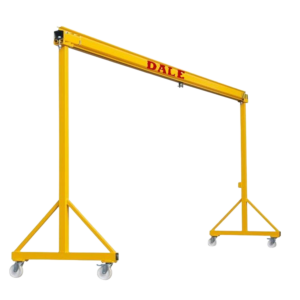
Steel mobile gantries can provide a robust solution for regular lifting tasks while allowing the gantry to be positioned over the load when required. Depending on the design, features can include castors, adjustable configurations and compatibility with manual or powered hoists.
Lightweight Steel Gantries
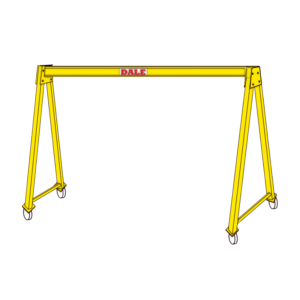
Lightweight steel gantries are designed to provide the strength of a steel lifting structure while remaining practical for applications where the equipment needs to be moved or stored.
The DALE PORTC Workshop Light Steel Gantry, for example, uses the Erikkila PROSYSTEM® light crane system and is available from 250kg to 1t WLL, with spans and heights suitable for workshop and light industrial applications.
Explore the Full Dale Lifting and Handling portable gantry range.
Aluminium Portable Gantries
Aluminium portable gantries are particularly useful where low equipment weight, transportability and rapid assembly are important.
The WiMAG portable gantry range includes lightweight aluminium designs that can be assembled and dismantled for transportation between locations. The WiMAG 525, for example, has a 500kg WLL and adjustable height and beam span, with individual components designed for practical manual handling.
This type of gantry can be particularly useful for contractors, maintenance teams and engineers who require a temporary lifting point at different locations.
Explore the WiMAG Portable Gantry Range.
Steel Mobile Lifting Gantries
For heavier workshop and industrial applications, steel mobile lifting gantries can provide greater lifting capacities while retaining the flexibility of a movable system.
Our DALE range includes workshop and steel mobile gantries covering different WLL requirements, including models from 250kg through to 5t.
Depending on the model, options can include braced or unbraced designs, different beam spans and heights, and configurations suitable for use with compatible lifting equipment.
Portable Gantries for Different Applications
Portable gantries can be used where a fixed lifting system isn’t available or where lifting requirements change between locations.
Typical applications include:
- Workshop maintenance and machinery servicing
- Motor, pump and gearbox removal
- Equipment installation and positioning
- Manufacturing and engineering operations
- Construction and site maintenance
- Vehicle and plant maintenance
- Warehouse and stores operations
- Loading and unloading applications
- Temporary lifting points
- Mobile engineering and maintenance work
- Lifting and handling in confined or restricted areas
The appropriate gantry should always be selected according to the specific load, lifting arrangement, working environment and manufacturer’s requirements.
Portable Gantries for Temporary and Mobile Lifting
One of the main advantages of a portable gantry is the ability to create a lifting point without installing permanent overhead lifting equipment.
A mobile gantry can be positioned over the load when required and moved or dismantled afterwards. This can make it particularly useful for maintenance teams, contractors and facilities where lifting requirements are occasional or take place across different areas.
Demountable designs can also be useful where the gantry needs to be transported between sites or stored when not in use.
However, portability does not remove the need to consider the suitability of the floor, working area and complete lifting arrangement. Mobile gantries should only be used on suitable surfaces and in accordance with the manufacturer’s instructions.
Gantry Hoists and Beam Trolleys
A portable gantry is normally used with a suitable hoist and, where required, a beam trolley to raise and position the load.
Depending on the gantry design and application, compatible equipment can include:
- Manual chain hoists
- Electric chain hoists
- Push or plain beam trolleys
- Geared beam trolleys
- Beam trolley and hoist combinations
The hoist, trolley and any lifting accessories must have suitable capacity and be compatible with the gantry and intended lifting arrangement.
Some portable gantries are supplied with a beam trolley as part of the system, while others can be configured according to the user’s requirements. For example, the WiMAG 525 is supplied with an integrated beam trolley and offers optional accessories including a manual chain hoist and trolley locking device.
Portable Gantry Safety and Working Load Limits
Portable gantries are lifting equipment and must be selected, assembled and used correctly for the intended application.
Before lifting, the gantry should be positioned on a suitable surface and assembled in accordance with the manufacturer’s instructions and inspected by a competent person. The rated Working Load Limit (WLL) must not be exceeded, and the complete lifting arrangement should be checked to ensure the gantry, hoist, trolley and lifting accessories are suitable for the load.
Particular attention should be given to:
- Ground or floor condition
- Gantry assembly and locking mechanisms
- Castors and wheel condition on mobile models
- Beam trolley compatibility
- Hoist capacity
- Load stability
- Centre of gravity
- Vertical lifting and avoidance of side loading
- Keeping personnel clear of suspended loads
Portable gantries should only be operated by suitably trained personnel and inspected and maintained in accordance with the manufacturer’s requirements and applicable lifting regulations.
Portable Gantry Inspection and LOLER
Portable gantries and the lifting equipment used with them should be appropriately inspected and maintained to ensure they remain suitable for use.
Depending on the equipment and application, lifting equipment may be subject to thorough examination under the Lifting Operations and Lifting Equipment Regulations (LOLER).
Inspection requirements can include examination of the gantry structure, lifting points, connections, castors, beam trolley and associated lifting equipment for conditions such as damage, deformation, excessive wear or corrosion.
If you need support with lifting equipment inspection, LOLER examinations, testing or certification, our team can help with your requirements.
Contact our Manchester and Sheffield teams about your LOLER requirements.
Bespoke and Specialist Gantry Solutions
Standard portable gantries can provide an effective solution for many lifting applications, but some requirements may call for a more specialised system.
Where factors such as lifting capacity, span, height, access restrictions or the working environment fall outside a standard configuration, our team can help identify a suitable lifting solution.
Working alongside our divisional partner Dale Lifting and Handling Specialists, Lifting Gear Products can provide technical support and tailored lifting solutions for more specialist applications.
This can include helping to select a suitable gantry configuration, compatible hoist and trolley equipment, or developing a lifting solution around the requirements of the application.
Need Help Choosing a Portable Gantry?
If you’re unsure which portable gantry is suitable for your application, our team can help.
Tell us the load weight, required WLL, available height, required span, lifting environment and how the gantry needs to be moved or positioned, along with any other requirements you have.
We can help you identify a suitable portable gantry and compatible lifting equipment for the application.
Browse our range of portable gantries or contact our team to discuss your lifting requirements.
Portable Gantry FAQs
-
What is a portable gantry?
A portable gantry is a freestanding lifting structure that provides a temporary or movable lifting point where a permanent overhead crane or fixed lifting system isn’t available or practical. Portable gantries can be used with suitable hoists and beam trolleys to lift and position loads in workshops, maintenance areas, construction sites and other industrial environments.
-
What can portable gantries be used for?
Portable gantries can be used for a wide range of lifting and handling applications, including machinery maintenance, equipment installation, engineering work, vehicle and plant maintenance, manufacturing and temporary lifting operations. The gantry should always be selected according to the load, lifting arrangement and working environment.
-
How much can a portable gantry lift?
The Working Load Limit (WLL) depends on the specific gantry design and configuration. Our range includes portable gantries with capacities from around 250kg through to 5 tonnes, with different spans, heights and configurations available. The WLL of the complete lifting arrangement must not be exceeded.
-
Can a portable gantry be used with a hoist?
Yes. Portable gantries can be used with suitable manual or powered hoists, normally through a compatible beam trolley or integrated trolley system. The hoist and trolley must be suitable for the gantry, load and lifting arrangement, and their rated capacities must be appropriate for the intended lift.
-
Can portable gantries be used outdoors?
Some portable gantries are suitable for outdoor or temporary site applications, but suitability depends on the specific design, ground conditions, weather exposure and manufacturer’s requirements. The gantry must be positioned on a suitable, stable and load-bearing surface and used in accordance with its manufacturer’s instructions.
-
Do portable gantries require LOLER inspection?
Portable gantries and associated lifting equipment may be subject to the requirements of LOLER, depending on their use and application. Where LOLER applies, lifting equipment must be thoroughly examined at the appropriate intervals and maintained in a safe condition. Our team can help with lifting equipment inspection and LOLER requirements.