
Chain Slings
Lifting Gear Products supplies a comprehensive range of chain slings for lifting, positioning and handling loads across industrial, construction, manufacturing, engineering and other demanding applications throughout the UK.
Available in Grade 6+, Grade 8, Grade 10 and Grade 12 configurations, our chain slings can be supplied as single-leg, two-leg, three-leg and four-leg assemblies, as well as specialist pipe and choke slings. We can also configure chain slings with different hooks, master links, shortening devices and other components to suit the requirements of the lift.
Products
-
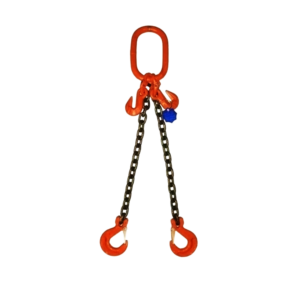
Pewag Grade 10 Double Leg Chain Sling Assembly – 2t–56t WLL
From: £126.27£151.52From: £113.64£136.37 Exc VATInc VAT -
Pewag Grade 10 Four Leg Chain Sling Assembly – 3t-85t WLL
From: £249.34£299.21From: £224.41£269.29 Exc VATInc VAT -
Pewag Grade 10 Single Leg Chain Sling Assembly – 1.4t-40t WLL
From: £72.98£87.58From: £65.68£78.82 Exc VATInc VAT -
Pewag Grade 10 Three Leg Chain Sling Assembly – 3t-85t WLL
From: £198.61£238.33From: £178.75£214.50 Exc VATInc VAT -
Pewag KWB Grade 8 Four Chain Sling Assembly – 2.36t-67t WLL
From: £173.26£207.91From: £155.93£187.12 Exc VATInc VAT -
Pewag KWB Grade 8 Single Leg Chain Sling Assembly – 1.12t–31.5t WLL
From: £53.56£64.27From: £48.20£57.84 Exc VATInc VAT -
Pewag KWB Grade 8 Three Leg Chain Sling Assembly – 2.36t-67t WLL
From: £138.80£166.56From: £124.92£149.90 Exc VATInc VAT -
Pewag KWB Grade 8 Two Leg Chain Sling Assembly – 1.6t-45t WLL
From: £90.68£108.82From: £81.61£97.93 Exc VATInc VAT -

Pewag PCWI G6+ Stainless Steel Pump Lifting Chain
Price on request -
Pewag Winner Inox G6+ Four Leg Chain Sling Assembly
From: £914.59£1,097.51From: £823.13£987.76 Exc VATInc VAT -
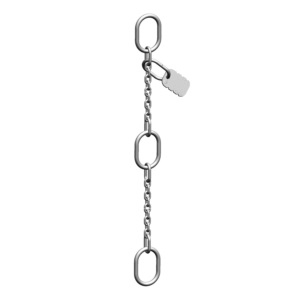
Pewag Winner Inox G6+ Single Leg Chain Sling Assembly
From: £265.45£318.54From: £238.91£286.69 Exc VATInc VAT -
Pewag Winner Inox G6+ Three Leg Chain Sling Assembly
From: £705.52£846.62From: £634.97£761.96 Exc VATInc VAT -
Pewag Winner Inox G6+ Two Leg Chain Sling Assembly
From: £437.15£524.58From: £393.44£472.13 Exc VATInc VAT -
Pewag Winner Pro Grade 12 Double Leg Chain Sling Assembly – 3.35t-17.5t WLL
From: £217.71£261.25From: £195.94£235.13 Exc VATInc VAT -
Pewag Winner Pro Grade 12 Four Leg Chain Sling Assembly – 5t-26.5t WLL
From: £451.94£542.33From: £406.75£488.10 Exc VATInc VAT -
Pewag Winner Pro Grade 12 Single Leg Chain Sling Assembly – 2.36t-12.50t WLL
From: £122.02£146.42From: £109.82£131.78 Exc VATInc VAT




Chain Slings for Different Lifting Applications
Chain slings provide a durable and versatile solution for lifting loads where strength, adjustability and resistance to abrasion are important. Compared with textile slings, chain slings are particularly well suited to demanding environments where loads may have sharp edges, high temperatures or abrasive surfaces, subject to the correct grade, configuration and application requirements.
Our range includes:
- Single-leg chain slings for straightforward lifting applications and single lifting points
- Double-leg chain slings for lifting loads from two points and improving stability
- Three-leg chain slings for loads requiring multiple lifting points and greater load control
- Four-leg chain slings for multi-point lifting where stability and load distribution are important
- Pipe and choke slings for wrapping around pipes, tubes, bundles and other suitable loads
- Configurable chain slings that can be specified with different chain lengths, hooks, master links and shortening components
The number of legs, lifting angle, hitch arrangement and connection points all affect the Working Load Limit (WLL) of a chain sling. Multi-leg slings should not simply be assumed to share the load equally, particularly where the load or lifting points are uneven. The correct configuration should always be selected using the manufacturer’s WLL information and the requirements of the lift.
Choosing the Right Chain Sling Grade
Chain grade is an important consideration when selecting a chain sling. Different grades offer different combinations of strength, Working Load Limit, chain size and weight, allowing the sling to be matched more closely to the application.
Grade 6+
Grade 6+ stainless steel chain slings provide a lifting solution for applications where corrosion resistance, hygiene and ease of cleaning are important. They are particularly suited to environments such as food processing and pharmaceutical applications where lifting equipment may be exposed to demanding cleaning procedures.
Explore our range of Grade 6+ Chain Slings.
Grade 8
Grade 8 chain slings are an established choice for general-purpose lifting and remain widely used across industrial and construction applications. They offer a good balance of strength, durability and availability, with single, two, three and four-leg configurations available.
Explore our range of Grade 8 chain slings.
Grade 10
Grade 10 chain slings provide a higher strength-to-weight option compared with Grade 8, allowing higher Working Load Limits from comparable chain sizes in suitable applications. This can help reduce the weight of the sling itself while maintaining the required lifting capacity. Grade 10 systems are available with a wide range of hooks, master links and shortening components.
Configure your Grade 10 chain sling.
Grade 12
Grade 12 chain slings are designed for demanding lifting applications where higher Working Load Limits and improved strength-to-weight performance are important. Grade 12 systems can allow a smaller chain size to achieve a similar WLL to a lower-grade chain in some applications, helping to reduce sling weight and improve handling.
For example, pewag’s Grade 12 systems are designed to provide significantly higher load capacity than Grade 8 systems, while maintaining a strong focus on durability, handling and component compatibility.
The correct grade should always be selected based on the required WLL, sling configuration, lifting angle, application and compatible components rather than simply choosing the highest available grade.
Explore our range of pewag Grade 12 chain slings.
Understanding Chain Sling WLL and Lifting Angles
The Working Load Limit (WLL) of a chain sling depends on more than the chain diameter and grade. The number of legs, sling angle, hitch arrangement and capacity of the individual components can all affect the maximum permitted load.
With multi-leg chain slings, the angle between the sling legs and the vertical affects the forces acting on each leg. As the angle increases, the force in each leg also increases, which can reduce the permitted WLL.
This means a two-, three- or four-leg chain sling should not simply be selected by dividing the load weight by the number of legs. The manufacturer’s WLL information should always be used for the specific chain grade, configuration and lifting arrangement.
Chain Sling Shortening and Load Adjustment
Chain shortening devices allow the effective length of a chain sling to be adjusted to suit the load and lifting arrangement. This can be particularly useful when lifting loads with different lifting-point positions, when balancing an uneven load, or when the available headroom makes precise sling length important.
Depending on the chain grade and system, shortening methods can include shortening clutches, chain grabs, shortening hooks and shortening plates. These components allow the chain to be shortened at a controlled point rather than relying on unsuitable methods of securing or knotting the chain.
For example, imagine lifting a fabricated steel frame with lifting points positioned at different distances from the centre of gravity. If identical-length sling legs were used without adjustment, the frame could lift unevenly and place more load onto one lifting point. A correctly configured multi-leg chain sling with suitable shortening devices can allow individual legs to be adjusted so the load is better balanced before lifting.
Shortening devices therefore aren’t simply a way of making a sling shorter, they can be an important part of configuring the sling to suit the geometry and balance of the load.
Configurable Chain Sling Assemblies
Not every lifting application can be covered by a standard chain sling. We can configure chain sling assemblies around your requirements, including the chain grade, length, number of legs, master links, hooks, shortening devices and other compatible components.
This allows a chain sling to be specified for the way the load actually needs to be lifted rather than selecting a standard assembly and trying to adapt it afterwards.
Our configurable chain sling range includes solutions from established manufacturers including KWB, Pewag and William Hackett, with additional brands and configurations being added to the range.
William Hackett, for example, manufactures custom-made chain sling assemblies in single, two, three and four-leg configurations, with a range of end fittings for different lifting applications.
pewag also provides configurable chain sling systems across its Grade 10 and Grade 12 ranges, including chains, master links, hooks, connecting links and shortening elements.
If you know the load, lifting points and required configuration but aren’t sure which chain sling arrangement you need, our team can help specify a suitable assembly.
Chain Sling Configuration and Components
A chain sling is more than just a length of lifting chain. The components used to assemble the sling need to be compatible with the chain grade and application, and the complete assembly must be suitable for the required WLL.
Depending on the configuration, a chain sling may include:
- Master links and master link assemblies
- Connecting links
- Clevis or eye-type hooks
- Self-locking and safety hooks
- Sling Hooks
- Shortening clutches and hooks
- Chain grabs
- Shortening plates
- Specialist hooks for specific applications
- Identification and certification tags
For three- and four-leg chain slings in particular, the upper master link arrangement needs to provide suitable connection and articulation for the additional legs. The configuration should therefore be specified as a complete assembly rather than simply combining individual components without checking their compatibility and WLL.
Chain Slings for Pipes and Choked Loads
Pipe and choke slings are designed for applications where the chain needs to pass around the load before connecting back to the sling assembly. They can be useful when lifting pipes, tubes, bundles and other loads where a conventional lifting point isn’t available or where a controlled choke arrangement is appropriate.
The way the sling is attached to the load affects its WLL and the way the load behaves during the lift. A choked arrangement should therefore only be used where it is suitable for the load and in accordance with the manufacturer’s instructions and applicable lifting requirements.
Chain Sling Standards, Inspection and Certification
Chain slings used for lifting should be selected, assembled and used in accordance with the relevant standards and manufacturer’s requirements. EN 818-4 covers safety requirements for chain slings, including single-, two-, three- and four-leg assemblies, while EN 818-2 covers the short-link lifting chain used in chain sling assemblies.
Each completed chain sling should be appropriately identified and supplied with the relevant information needed to establish its Working Load Limit and configuration. Regular inspection and thorough examination are also important to identify damage, deformation, excessive wear, corrosion or other conditions that could affect safe use.
Lifting equipment must also be examined at appropriate intervals under the relevant LOLER requirements, depending on the equipment and application.
Contact us today to discuss your LOLER requirements.
Chain Slings FAQs
-
What is a chain sling?
A chain sling is a lifting assembly made from one or more lengths of lifting chain fitted with compatible master links, hooks and other components. Chain slings are used with cranes and other lifting equipment to connect the load to the lifting hook.
-
What is the difference between Grade 8, Grade 10 and Grade 12 chain slings?
The main difference is the strength and Working Load Limit available from the chain and components. Higher-grade systems can provide greater WLL for a comparable chain size, potentially allowing smaller and lighter components for some applications. The appropriate grade should be selected based on the required WLL, configuration and application rather than simply choosing the highest grade.
-
What is a single-leg chain sling used for?
A single-leg chain sling is commonly used for loads with a suitable single lifting point or for applications where the chain can be used in an appropriate hitch arrangement. The WLL depends on the chain size, grade and hitch configuration.
-
What is the difference between 2-leg, 3-leg and 4-leg chain slings?
The number of legs determines how many lifting points the sling can connect to and can affect load stability and distribution. Two-, three- and four-leg slings can be useful for loads with multiple lifting points, but the load should not automatically be assumed to be shared equally between every leg.
-
What are chain shortening devices used for?
Shortening devices such as clutches, chain grabs and shortening plates allow the effective length of individual sling legs to be adjusted. They can be used to accommodate different lifting-point positions, improve load balance and help position the load correctly during a lift.
-
Can chain slings be configured to order?
Yes. Chain slings can be configured around requirements such as chain grade, chain diameter, overall length, number of legs, master link arrangement, hooks and shortening devices. We can help specify a suitable assembly where a standard chain sling does not meet the requirements of the lift.
-
Are chain slings suitable for lifting pipes?
They can be, provided the sling and hitch arrangement are suitable for the pipe, load, surface and lifting method. Specialist pipe and choke sling configurations are available for applications where the chain needs to wrap around the load.
-
Do chain slings need to be inspected?
Yes. Chain slings should be inspected before use and examined at appropriate intervals by a competent person in accordance with applicable requirements. Inspection should identify issues such as excessive wear, deformation, stretched or damaged links, cracks, corrosion and damage to hooks or other components.