
Lifting Shackles
Lifting Gear Products supplies a comprehensive range of lifting shackles for connecting slings, hooks, hoists and lifting points to the load across industrial, construction, marine, offshore and engineering applications throughout the UK.
Our range includes bow shackles and dee shackles from Green Pin, Crosby and Yoke, available in Grade 6, Grade 8 and Grade 10 with screw pin, safety bolt, fixed nut and ROV pin options. Working Load Limits run from 0.33t for general rigging through to 1,500t for heavy lift projects.
Products
-
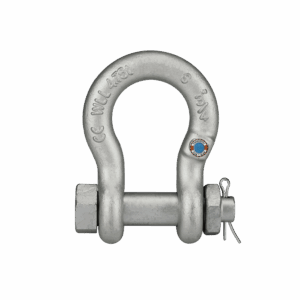
Green Pin Super GPSUPSC Grade 8 Bow Shackle, Screw Collar Pin – 3.3t to 85t
From: £25.45£30.54From: £22.91£27.49 Exc VATInc VAT -
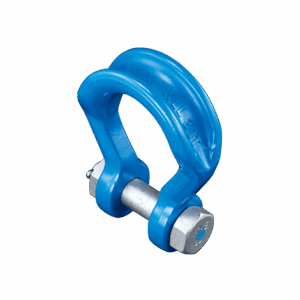
Yoke Grade 10 Forged Alloy Wide Body Shackle with Bolt Pin – 7t-30t WLL
From: £95.00£114.00From: £85.50£102.60 Exc VATInc VAT -
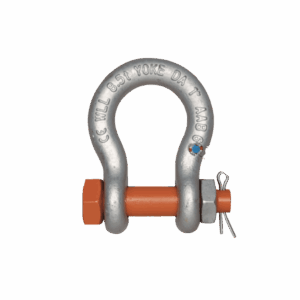
Yoke Offshore DA 808 Bow Shackle Screw Pin with Safety Pin – 2t-35t WLL
From: £23.00£27.60From: £20.70£24.84 Exc VATInc VAT -
Yoke Offshore DA 838 Bow Shackle Screw Pin with Safety Pin – 2t-35t WLL
From: £26.00£31.20From: £23.40£28.08 Exc VATInc VAT -
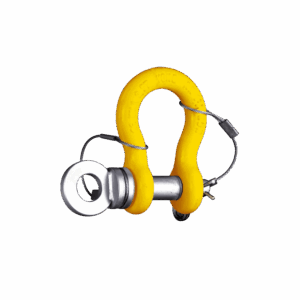
Yoke Offshore DA ROV Dee Shackle with Safety Pin – 6.5t-35t WLL
From: £88.00£105.60From: £79.20£95.04 Exc VATInc VAT


Bow Shackles and Dee Shackles
The shape of the shackle body decides how it can be loaded, so it is the first choice to make.
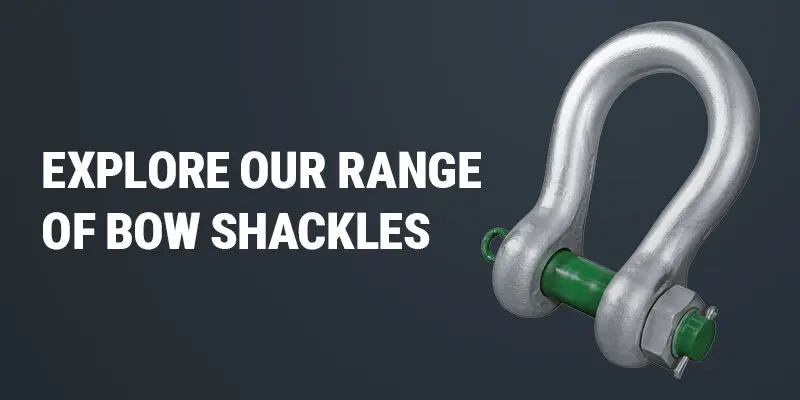
- Bow shackles have a rounded, wider body that gives more room for multiple sling legs or wide straps. They can accept loads from more than one direction, subject to the manufacturer’s reduction in Working Load Limit for angled or side loading. Crosby calls this style an anchor shackle, and it is sometimes known as an omega shackle.
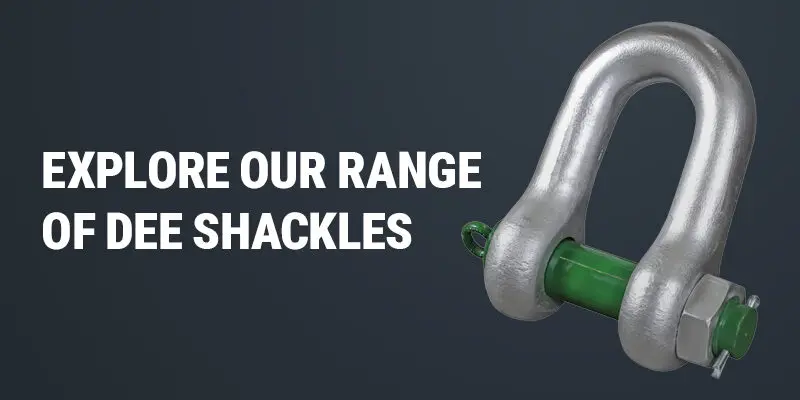
- Dee shackles have a narrower, straight-sided body designed for in-line loading between two connection points. They suit single-leg lifts and connections where space is tight. Crosby calls this style a chain shackle, and it is also written as D shackle.
As a guide, choose a bow shackle where two or more sling legs meet or where the load may not stay perfectly in line. Choose a dee shackle for a straight pull where the load sits centred on the pin and in the crown of the body.
Shackle Pin Types Explained
The pin is what secures the connection, and the right type depends on how long the shackle stays in place and whether the pin could rotate or loosen in use.
Screw Pin and Screw Collar Pin
A screw pin threads directly into the shackle body and is quick to fit and remove. Screw pin shackles suit temporary lifts and connections that are made and broken often. They are not recommended where the load can move across the pin and turn it, or for long-term installations, unless the pin is secured.
Safety Bolt (Nut and Bolt with Split Pin)
A safety bolt pin passes through the body and is secured with a nut and a split pin, so it cannot unscrew under vibration or rotation. Safety bolt shackles are the usual choice for permanent or long-term connections, for lifts where the load may rotate, and for applications where a second means of securing the pin is required.
Fixed Nut
Fixed nut shackles use a bolt, a nut that is locked in position and a securing pin. They give a high level of security against loosening and are widely used in offshore and high-vibration applications.
Square Head and Sunken Hole Pins
Square head pins are tightened with a spanner and are common in fishing, marine and towing work. Square sunken hole pins sit flush with the shackle body, which helps prevent nets, ropes and lines from snagging.
ROV Shackle Pins
ROV shackles are designed to be connected and released by a remotely operated vehicle during subsea work. Options include tapered pin, guided pin, spring pin, spring release and locking clamp designs, with D handle or fishtail handle to suit the ROV manipulator.
Lifting Shackle Brands
We supply shackles from three established manufacturers, each with ranges suited to different applications.
Green Pin Shackles

Green Pin is our largest shackle range, covering Standard Grade 6 bow and dee shackles through to specialist designs. These include Super and Heavy Duty Grade 8 shackles for higher capacities, Polar shackles for low-temperature work, BigMouth and wide mouth shackles for bulky connections, and Sling shackles with a wider bow for use with slings. The range also covers ROV, mooring, towing and fishing shackles, and matt black Theatre shackles for stage and rigging work.
Explore our range of Green Pin shackles.
Crosby Shackles

Crosby shackles are recognised by their red pin and are widely specified in construction, offshore and heavy industry. Our range includes the G-209 screw pin anchor shackle and G-210 screw pin chain shackle, the G-2130 and G-2150 bolt type shackles, the G-2140 alloy bolt type shackle for higher capacities, and offshore and subsea versions.
Explore our range of Crosby shackles.
Yoke Shackles

Yoke supplies Grade 10 forged alloy wide body shackles with bolt pin, along with offshore shackles fitted with a screw pin and secondary safety pin, and ROV shackles. Wide body shackles give a larger bearing surface for the sling, which helps reduce sling wear on heavier lifts.
Explore our range of Yoke shackles.
Shackle Grades and Working Load Limits
Shackle grade indicates the strength of the steel, and a higher grade gives a higher Working Load Limit (WLL) from a similar size of shackle.
- Grade 6 high tensile steel shackles are the standard choice for general lifting and rigging.
- Grade 8 alloy steel shackles provide higher capacity from a comparable size, and are used for heavy lift, offshore and low-temperature ranges.
- Grade 10 forged alloy shackles offer a further increase in strength for demanding lifts where size and weight matter.
The WLL marked on a shackle applies to a load applied in line. Where a bow shackle is loaded at an angle, the permitted load is reduced, and the manufacturer’s side loading information should always be used. The shackle should also be matched to the WLL of the sling, hook or lifting point it connects to.
Choosing the Right Lifting Shackle
Selecting a shackle means looking at more than the weight of the load. The main points to consider are:
- The WLL required, including any reduction for angled loading
- Bow or dee body, depending on the number of sling legs and direction of load
- Pin type, depending on how long the shackle stays in place and whether the pin could rotate
- The size of the pin and jaw opening, so the shackle fits the lifting point, hook or sling eye correctly
- The environment, such as offshore, subsea, low temperature or corrosive conditions
- Any standards or certification required for the project
Shackles are often used alongside chain slings, synthetic slings, lifting hooks and load points, and each component in the assembly needs to be compatible and rated for the lift.
If you know the load and how it will be lifted but are not sure which shackle you need, our team can help you specify a suitable option.
Shackle Standards, Inspection and Certification
Lifting shackles should be marked with the manufacturer’s identification, Working Load Limit, grade and a traceability code. Depending on the product, shackles in our range are manufactured to standards such as EN 13889, US Federal Specification RR-C-271 and ASME B30.26, and certification is available for offshore and project requirements.
Shackles should be checked before each use for wear, distortion, cracks, corrosion and damage to the pin or thread. The correct pin must always be used, and a shackle pin should never be replaced with a standard bolt.
As lifting accessories, shackles must also be thoroughly examined by a competent person at the intervals required under LOLER.
Contact us today to discuss your LOLER requirements.
Lifting Shackles FAQs
-
What is a lifting shackle?
A lifting shackle is a U-shaped forged steel connector closed with a removable pin. It is used to join slings, hooks, hoists and lifting points to each other or to the load.
-
What is the difference between a bow shackle and a dee shackle?
A bow shackle has a rounded body with more internal room, so it can take multiple sling legs and loads from more than one direction, subject to the manufacturer’s limits. A dee shackle has a narrower body and is designed for loads applied in a straight line.
-
Is an anchor shackle the same as a bow shackle?
Yes. Anchor shackle is the term Crosby and other American manufacturers use for a bow shackle. In the same way, a chain shackle is a dee shackle.
-
When should I use a safety bolt shackle instead of a screw pin shackle?
Use a safety bolt shackle for permanent or long-term connections, where the load could rotate the pin, or where vibration is present. Screw pin shackles are suited to temporary lifts where the connection is made and removed regularly.
-
What is a fixed nut shackle?
A fixed nut shackle uses a bolt with a nut that is locked in place and a securing pin. It is chosen where extra security against the pin loosening is needed, such as offshore and high-vibration applications.
-
Can a shackle be side loaded?
Bow shackles can be loaded at an angle, but the Working Load Limit is reduced. The reduction depends on the angle and the manufacturer, so the manufacturer’s side loading table should always be followed. Dee shackles are intended for in-line loading only.
-
What does the grade of a shackle mean?
The grade indicates the strength of the steel. Grade 6 is the standard for general lifting, while Grade 8 and Grade 10 shackles provide a higher Working Load Limit from a similar size.
-
What is an ROV shackle?
An ROV shackle is designed to be connected and released underwater by a remotely operated vehicle. It has a pin and handle arrangement the ROV can grip and operate, with options including spring pin, tapered pin, guided pin and locking clamp designs.
-
What are Green Pin Polar shackles used for?
Green Pin Polar shackles are Grade 8 shackles designed for lifting in low-temperature environments, such as arctic and offshore work, where standard shackles may not be suitable.
-
Which shackle should I use with a webbing sling or round sling?
A shackle with a wider bearing surface, such as a sling shackle, web sling shackle or wide body shackle, spreads the load across the sling and helps reduce wear. The shackle should be matched to the width and WLL of the sling.
-
How do I choose the right size of shackle?
Start with the Working Load Limit needed for the lift, then check that the pin diameter and jaw opening fit the lifting point, hook or sling eye. The shackle should seat properly without being forced or packed out.
-
Do lifting shackles need to be inspected?
Yes. Shackles should be checked before each use and thoroughly examined by a competent person at the intervals required under LOLER. Any shackle showing wear, distortion, cracks, corrosion or pin damage should be removed from service.