
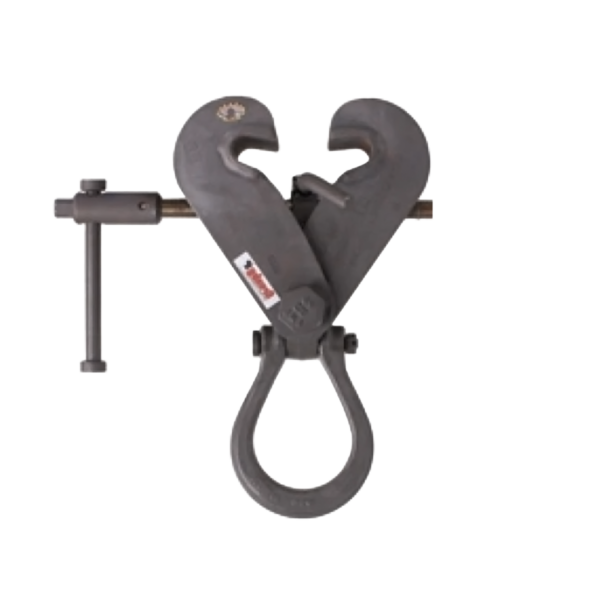
Crosby IPTKUD Beam Clamp with Double Locking Device – 2t to 5t WLL

CRO-BC-IPTKD
Crosby IPTKUD beam clamp with double locking device for safe lifting and transferring steel beams. WLL from 2t to 10t, welded alloy steel construction, proof tested to 2° WLL with certification.
Price on request
Description
The Crosby IPTKUD Beam Clamp is designed for secure lifting, positioning, and transferring of steel beams and structural sections, featuring a double locking device for enhanced safety and stability during lifts. This feature ensures the clamp remains securely attached to the beam flange, minimizing the risk of accidental disengagement.
Manufactured from a welded alloy steel body with forged alloy components, the IPTKUD beam clamp offers durability, strength, and reliability in demanding lifting applications. The adjustable jaw design accommodates a wide range of beam flange widths, allowing versatile use across different structural elements.
Each unit is individually proof tested to twice the Working Load Limit (WLL) and supplied with a certificate and user manual. The Crosby IP logo, WLL, and jaw opening are permanently stamped on the clamp, and each clamp is serialised for traceability.
The IPTKUD clamp can operate in a temperature range from -40 °C to +100 °C and includes maintenance and repair kits to ensure long-term safe operation.
Safety & User Instructions
Confirm the beam flange width is within the clamp’s adjustable range.
Ensure the double locking device is engaged before lifting.
Do not exceed the rated Working Load Limit (WLL).
Inspect for damage, wear, or deformation prior to each use.
Use with properly rated lifting equipment and rigging.
Follow standard lifting safety procedures and PPE requirements.
Recommended Applications
Lifting and positioning steel beams and structural sections
Construction and structural steel installation
Fabrication workshops and industrial lifting
Applications requiring enhanced clamp security via double locking device
Technical information
| Weight | N/A |
|---|
Key Features
Working Load Limits: 2t – 10t
Designed for lifting and transferring steel beams
Double locking device for extra safety
Welded alloy steel body with forged alloy components
Adjustable jaw range for different beam flange widths
Individually proof tested to 2x WLL with certification
Serialised and permanently stamped for traceability
Maintenance and repair kits available
Temperature range: -40 °C to +100 °C
Designed in accordance with EN 13155 and ASME B30.20


